



Operational Planning and Risk Management in Full Truckload Transportation: Why Are the Right Decisions in the Field Critical?
Full truckload transportation does not end when the cargo is loaded onto a single vehicle; in fact, the most critical phase of the operation begins at that moment. The planning done before the truck departs, the decisions made during transit, and the evaluations after delivery ultimately determine the outcome of the operation.
For this reason, success in full truckload transportation depends less on speed and more on preparation, and less on luck and more on the ability to respond with the right operational reflexes. Without these reflexes, an operation may start with good intentions but still struggle in real-world conditions.
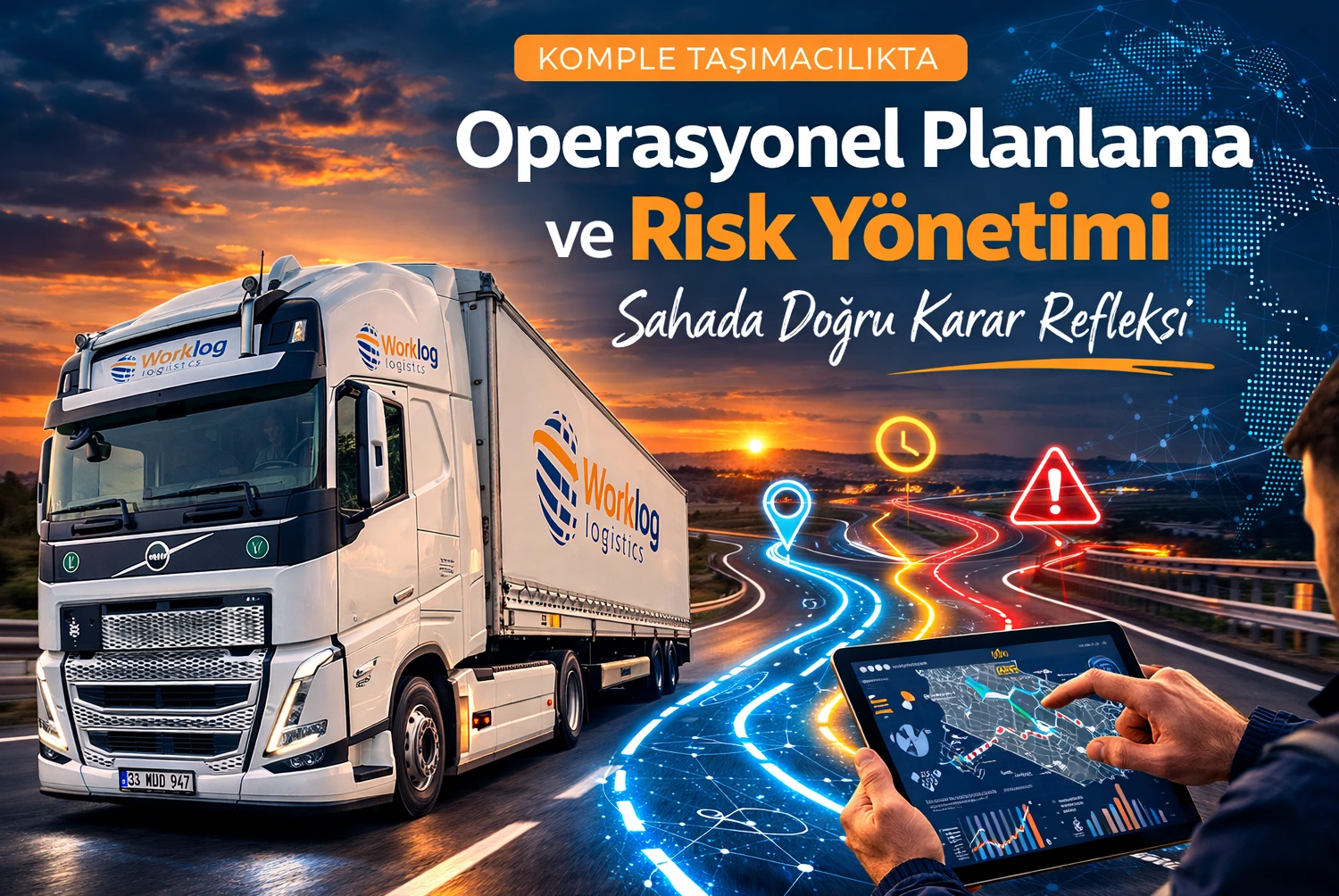
Operational planning is not merely about drawing a route on a map. The real challenge is ensuring that the cargo is delivered smoothly despite changing field conditions. Risk management, on the other hand, means not panicking when problems arise but knowing in advance how to respond in different situations.
This article examines the common risks encountered in full truckload transportation operations and explains why operations that fail to manage these risks effectively often face difficulties in the field.
Operational Planning: The Backbone of the Operation
In full truckload transportation, planning is not simply saying “the truck departs on this day and arrives on that day.” The departure time, route, cargo characteristics, and delivery expectations must all be evaluated together.
When this balance is not established, operations become vulnerable. Poor planning can lead to:
- delivery delays
- increased operational costs
- reduced efficiency
Effective operational planning in the field should never rely on a single scenario. Alternative routes, alternative timing, and alternative decision options must always be considered.
A plan without alternatives is not truly a plan.
Pre-Operation Risk Planning
Risk management begins before the ignition key is turned. The analyses carried out before the operation starts can prevent many issues before they even arise.
A common mistake at this stage is assuming that the cargo information provided during the quotation stage is fully accurate and does not require further verification.
However, if the following details are not clearly confirmed:
- dimensions
- weight
- stackability
- securing requirements
the operation becomes fragile.
Even a small difference in measurements can change the type of vehicle required, the loading configuration, and the departure plan.
Route planning also requires more than simply looking at a map. Road conditions, border crossings, and seasonal congestion must be considered. Otherwise, unexpected delays in the field become inevitable.
A Common Situation in the Field
Situation: A discrepancy in cargo dimensions is discovered at the last moment.
Correct response: Revising the operational plan before the truck departs.
Incorrect response: Continuing the operation with the original plan.
Result: With the correct response, the operation may start slightly later but proceeds in a controlled and predictable manner.
Weather Conditions: Operations Should Follow Field Reality, Not Just the Calendar
Snow, ice, fog, and heavy rain are not exceptions in full truckload transportation; they are natural parts of operations. Despite this, many operations still determine departure times based solely on schedules.
This approach is one of the most common planning mistakes encountered in the field.
Operational experience shows that a truck may depart slightly later if necessary, but it should avoid being on the road during high-risk hours.
Without this reflex:
- minor delays can escalate
- safety risks increase
- operational disruptions multiply
A Common Situation in the Field
Situation: Risk of road icing during nighttime hours.
Correct response: Adjusting the departure time to daytime hours.
Incorrect response: Sticking to the original schedule.
Result: The operation may slow down slightly, but control is maintained.
Risk Management During Operations
Field conditions rarely evolve exactly as planned. The real difference in successful operations lies in how decisions are made when risks emerge.
A common mistake is treating every delay in the same way.
However, when evaluating delays, the following factors must be considered together:
- operational criticality of the cargo
- delivery priority
- alternative operational scenarios
Operations teams must go beyond simply relaying information from the driver. They must transform that information into operational scenarios and actionable decisions.
Without this reflex, decisions are delayed and their impact becomes limited.
A Common Situation in the Field
Situation: Extended waiting time at a border crossing.
Correct response: Evaluating alternative border crossings or adjusting the driving plan.
Incorrect response: Waiting without reassessing the situation.
Result: With the correct response, delays can be managed; with the wrong response, the operation becomes increasingly difficult.
Technology: A Support Tool, Not the Decision Maker
Vehicle tracking systems and real-time data significantly support logistics operations. However, if there is no operational reflex capable of interpreting that data, technology alone is not enough.
Successful operations are not those that merely observe data but those that make decisions based on it.
Post-Operation Evaluation
An operation is not truly finished once the delivery is completed. Without post-operation evaluation, similar mistakes tend to repeat themselves.
A common mistake at this stage is closing the operation purely based on the final result without analyzing the entire process.
In reality, every operation should serve as preparation for the next one.
Conclusion
Risks will always exist in full truckload transportation. The real issue is not the existence of these risks but how operations respond to them.
Operations without the right reflexes:
- struggle despite planning
- fail to gain full value from technology
- repeat the same issues despite experience
In logistics, what truly makes the difference is not theoretical knowledge but the ability to make the right decision at the right moment in the field.