




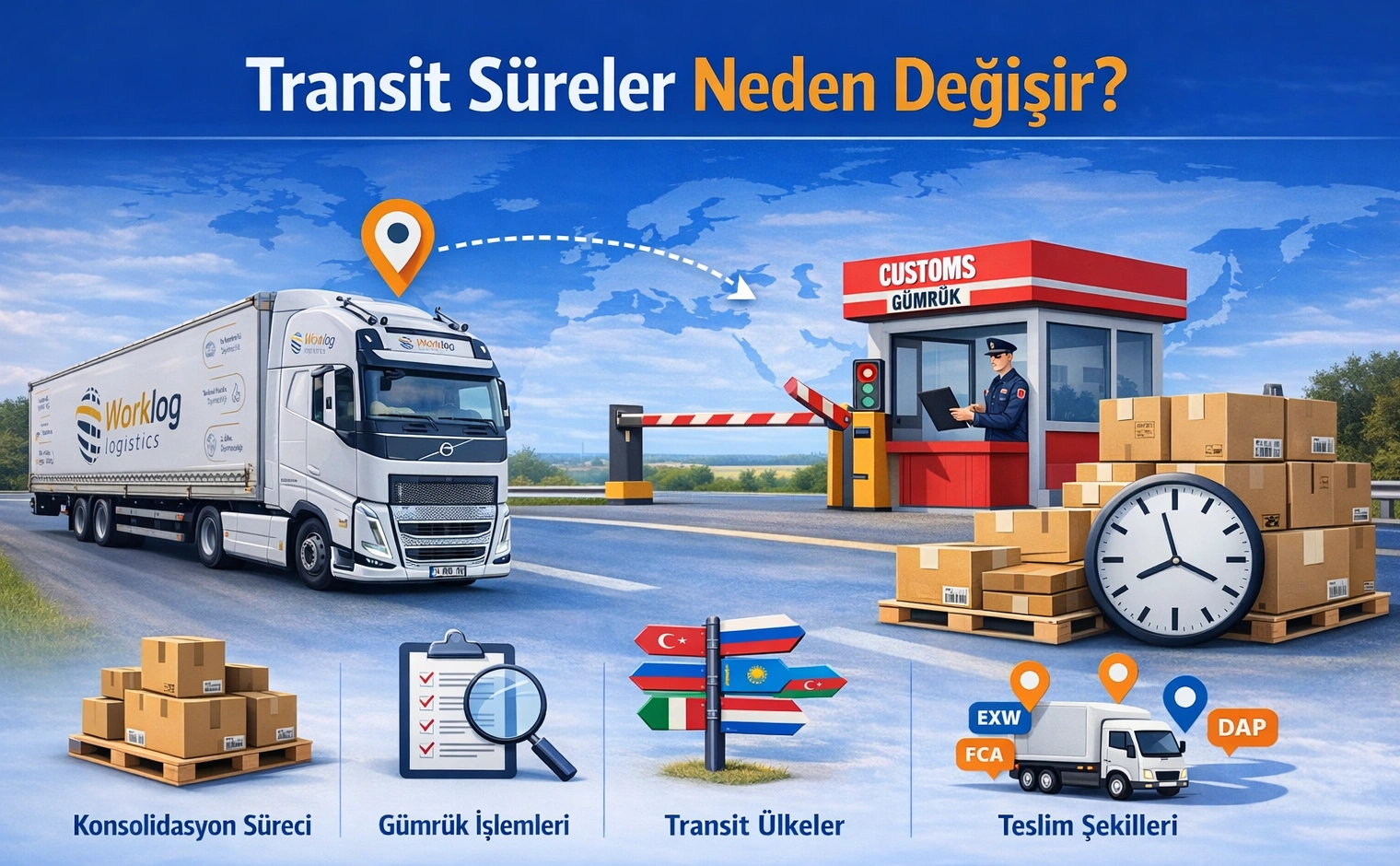
Why Do Transit Times Vary in Partial Transportation?
Transit times in partial transportation involve more variables compared to full truckload shipments. Even on the same route and over similar distances, delivery times for partial shipments may differ. This situation is often not a delay issue, but rather a natural outcome of the operational processes inherent in partial transportation.
In this article, we examine why transit times in partial transportation are not fixed, the key factors that affect these durations, and how processes should be evaluated, particularly in road-based partial transportation operations.
The Impact of Consolidation Time in Partial Transportation
The core of partial transportation is the consolidation of shipments belonging to different shippers into a single vehicle. Therefore, the start of the transit time is not only linked to the departure of the vehicle, but also to the completion of the consolidation process.
The main factors affecting consolidation time include:
Timing of shipments planned for the same route
Dimensions, weight, and handling requirements of the cargo
Warehousing and loading planning
Delays at this stage may extend the total transit time independently of the actual transportation duration.
The Effect of Customs Procedures on Transit Time
In partial transportation, a single vehicle carries shipments belonging to multiple shippers and consignees. This makes document consistency and declaration processes more critical during customs clearance.
Customs-related factors that affect transit times include:
Incomplete or incorrect documentation
Shipments with different delivery terms loaded on the same vehicle
Congestion during declaration and inspection procedures
Even minor inconsistencies in documentation may delay the entire vehicle and indirectly affect delivery times.
The Role of Transit Countries and Border Crossings
Transit countries along the route play a significant role in the variability of delivery times in partial transportation. Congestion at border crossings, transit quotas, and periodical regulations may cause transit times to deviate from planned schedules.
In particular:
Seasonal congestion
Public holidays
Transit permit requirements
require flexible transit time planning in partial transportation operations.
The Impact of Delivery Terms on Transit Time
Delivery terms directly affect the stage at which operations begin and when responsibility is transferred in partial transportation. As operational responsibility points vary under delivery terms such as EXW, FCA, or DAP, transit time calculations must be adjusted accordingly.
Incorrectly determined delivery terms may lead to:
Delays at the start of operations
Waiting times during customs procedures
Extended overall delivery durations
Factors Affecting Transit Times in Road Partial Transportation
Road partial transportation is one of the most widely used partial transport models in international logistics due to its flexible structure and broad geographical reach. However, road operations involve specific variables that may affect transit times.
Loading and Consolidation Planning
In road partial transportation, vehicle departures depend on the consolidation of multiple shipments destined for the same route rather than a single shipment. Therefore, departure dates are shaped by the timing of cargo arrivals at the warehouse.
Border Gates and Road Transit Congestion
Congestion at border crossings plays a decisive role in the variability of transit times in road partial transportation. During peak seasons or periodical inspections, border crossing durations may increase.
The Impact of Road Customs Procedures on Operations
The presence of shipments from different shippers on the same vehicle makes document control more sensitive in road customs procedures. Documentation inconsistencies may cause the entire vehicle to be held.
Driving Times and Legal Restrictions
Drivers’ legal driving and rest time regulations are a critical component of transit time calculations in road transportation. These legal requirements necessitate realistic delivery planning.
Operational Flexibility and Alternative Routes
Although road partial transportation offers route flexibility, alternative routes may need to be used due to roadworks, weather conditions, or temporary restrictions. Such operational decisions may cause limited changes in total transit time.
Realistic Transit Time Planning in Partial Transportation
Healthy transit time planning in partial transportation should not be based solely on distance calculations. Consolidation, customs procedures, transit crossings, and operational processes must be evaluated together.
For realistic planning:
Average transit times should be used as references
Operational risks should be anticipated in advance
Delivery dates should be planned with flexible time ranges
This approach ensures transparency in the process and effective expectation management.
Conclusion
The variability of transit times in partial transportation does not indicate poor planning. On the contrary, it is a natural result of consolidation, customs procedures, transit crossings, and operational conditions specific to road transportation.
With proper planning, complete documentation management, and strong operational control, transit times in partial transportation can be managed in a predictable and controlled manner. Successful partial transportation operations depend on accurate management of operational details.